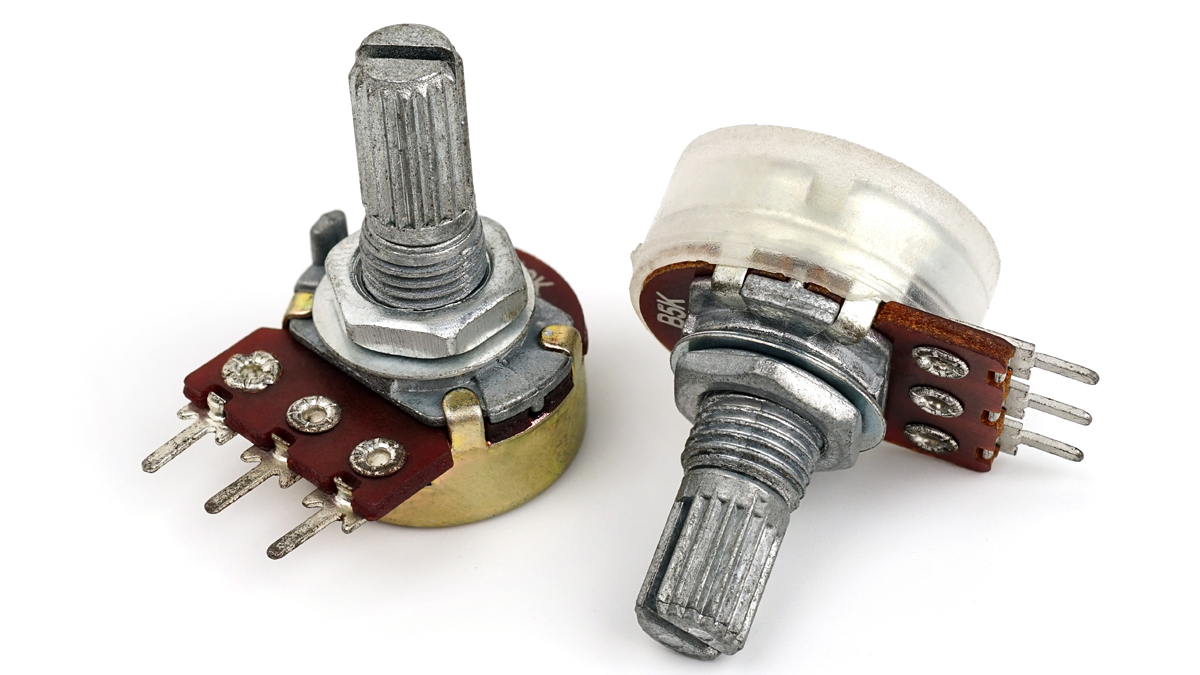
Variable Resistor (Potentiometer)
Category: Solar
₦400.00
The Variable Resistor, commonly known as a Potentiometer, is an adjustable resistor used to control voltage, current, or signal levels in electronic circuits. Ideal for tuning, calibration, and user-controlled adjustments in projects.
Key Features
Adjustable resistance for precise control of voltage or current
Commonly available in rotary or slide types
Compatible with Arduino, Raspberry Pi, and other microcontroller circuits
Durable construction with long-lasting mechanical operation
Used for volume control, light dimmers, sensor calibration, and adjustable circuits
Compact and easy to mount on PCBs or enclosures
Available in various resistance values (e.g., 1kΩ, 10kΩ, 100kΩ)
Detailed Description
The Variable Resistor (Potentiometer) is an essential component for electronics projects requiring adjustable resistance. By rotating or sliding the potentiometer knob, you can vary resistance and control the flow of current or voltage in a circuit.
It is widely used in Arduino projects, robotics, audio circuits, LED dimmers, sensor calibration, and other DIY electronics applications. The potentiometer provides smooth, reliable adjustment and is easy to install on breadboards, PCBs, or enclosures.
With its versatile functionality, it is perfect for both educational labs and hobbyist electronics projects.
Technical Specifications
Type: Variable Resistor / Potentiometer
Resistance Range: 1kΩ, 5kΩ, 10kΩ, 50kΩ, 100kΩ (varies by variant)
Power Rating: 0.25W – 0.5W (depending on type)
Tolerance: ±10%
Adjustment Type: Rotary or slide
Mounting: Through-hole or panel mount
Dimensions: Compact, standard sizes for PCB and project enclosure integration
Operating Temperature: -40°C – 70°C
What’s in the Box
1 × Variable Resistor (Potentiometer)
Ideal For
Adjusting voltage and current in Arduino and microcontroller projects
Audio volume and signal level control
LED dimmers and light control circuits
Sensor calibration and tuning
DIY electronics prototyping and experiments
Educational electronics labs
Important Note
Ensure the resistance value and power rating match your circuit requirements. Avoid forcing the knob beyond its mechanical limits to prevent damage.